Gmail phishing and cloud takeovers, Digital Defenders. |
When Oprah shows up in a smishing text, you know it’s Cybersecurity Awareness Month. Add in fake Google recruiters, router exploits, and cloud takeovers… and the day is just getting started. |
|
|
Here’s what you need to know: |
|
|
Google Careers Phishing Scam Targets Gmail Users |
A phishing campaign posing as Google Careers is stealing Gmail logins via spoofed Salesforce domains and Cloudflare-hosted sites.
Beyond just individuals, stolen Gmail logins enable enterprise-wide compromise through credential stuffing and lateral movement. This is an active attack in the wild. |
Traditional security awareness training alone won’t cut it anymore. Enforce email gateway filtering, block suspicious subdomains at DNS, and require MFA across corporate Google Workspace accounts to shut down this attack path before it begins. |
Government Shutdown Raises Cybersecurity Concerns for Businesses |
A missed 2026 budget deadline forced a US government shutdown on Oct. 1, sidelining federal workers and reducing CISA’s capacity.
The shutdown’s ripple effects hit contractors and vendors, shrinking security budgets, leading to phishing attacks against furloughed staff and ransomware threats to critical infrastructure. There is currently no date set for the shutdown to end. President Donald Trump has stated that federal layoffs could be imminent.
Third-party risk is significant right now. Tighten monitoring of third-party access, prepare staff against phishing lures, and ensure contingency plans cover delayed federal support during the shutdown. |
Red Hat OpenShift AI Bug Enables Full Cloud Takeover |
A critical flaw in Red Hat OpenShift AI could let low-privileged users escalate to cluster-admin rights and seize control of hybrid cloud infrastructure.
CVE-2025-10725 grants broad permissions to all authenticated users, exposing AI models and workloads. A compromised account can exfiltrate data, disrupt services, and install backdoors in entire environments.
Red Hat has issued a patch for the vulnerability. Apply patches, but also tighten access control, monitor for anomalous Pods, and enforce admission control policies. Don’t just patch—validate privilege boundaries and implement least privilege to break the attack chain before it escalates. |
|
|
Which cyber risk from the government shutdown concerns you most? |
|
|
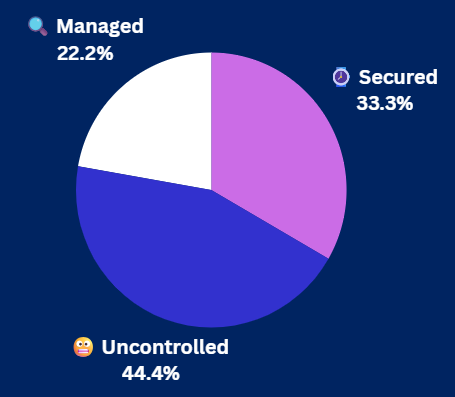
Yesterday's Pulse Check Results |
Wearables at Work: Hidden risk or managed threat? |
|
|
Security Tools You Can Use |
|
|
Smishing Scam with Fake 'Oprah' |
The risk is real. One compromised device can open doors to corporate accounts, MFA resets, or lateral movement inside networks. Smishing attacks, like I experienced, occur every day in the wild.
Smishing has evolved from random texts into a targeted, AI-fueled threat. This Cybersecurity Awareness Month, strengthen mobile phishing awareness and back it with layered defenses like MFA, mobile threat protection, and fast incident reporting to stop attackers at the first click. |
Hackers Weaponize Router APIs for SMS Phishing Campaigns |
Attackers are abusing cellular router SMS APIs to send mass texts with weaponized links.
Researchers warn that routers with default creds and outdated firmware are being hijacked into phishing engines, spreading malware and stealing credentials. These are ongoing attacks in the wild.
Enforce strong credentials, regularly patch firmware, and closely monitor SMS logs and network traffic to catch anomalous activity. |
|
|
Is Your Hybrid Cloud Secure Enough to Stop Attackers? |
Hybrid cloud offers flexibility and scale, but it also widens the attack surface, with misconfigurations, weak access controls, and unpatched workloads driving breaches. With adversaries actively scanning for exposed assets, securing hybrid deployments has never been more urgent. |
Here's how to harden hybrid cloud infrastructure: |
- Tighten access controls: enforce least privilege, MFA, and federated logins
- Segment workloads: limit traffic and isolate sensitive apps
- Patch and monitor: keep systems updated and catch anomalies early
- Automate compliance: validate configs and enforce standards at scale
|
Securing a hybrid cloud requires layered defense—combining access control, segmentation, monitoring, and automation to prevent missteps from becoming full-scale breaches. |
|
|
|
Ken Underhill is an award-winning cybersecurity professional, bestselling author, and seasoned IT professional. He holds a graduate degree in cybersecurity and information assurance from Western Governors University, bringing years of hands-on experience to the field. |
|
|
Cybersecurity Insider is a TechnologyAdvice business |
© 2025 TechnologyAdvice, LLC. All rights reserved. |
TechnologyAdvice, 3343 Perimeter Hill Dr., Suite 215, Nashville, TN 37211, USA. |
|
|
|