The shadows of cyberspace don’t sleep, Digital Defenders. |
Cloud services as phishing weapons, undersea cable cuts, tool exploits, GPU-gated malware, and open-source flaws—just the surface of threats facing enterprise defenses. Before you dive in: Take a quick survey to test how well you know Snapdragon. |
|
|
Here’s what you need to know: |
|
|
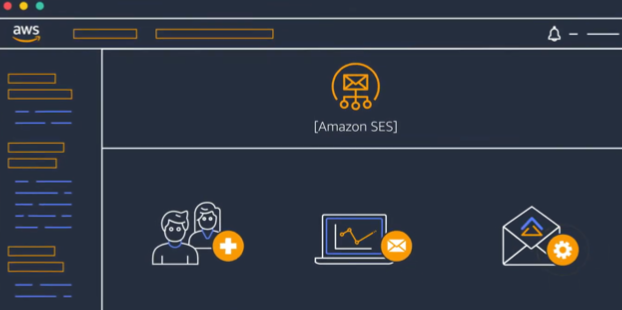
Amazon SES Hijacked to Send 50K+ Phishing Emails |
Researchers found a threat actor campaign abusing Amazon SES to send over 50,000 phishing emails a day. Attackers used stolen AWS keys and multi-regional automation to bypass SES sandbox limits and mimic legitimate domains. |
Victims received tax-themed phishing emails leading to credential theft, showing how trusted cloud services like AWS can be weaponized into attack platforms. Wiz sees this as an isolated attack, but attackers are evolving to evade cloud security tools.
Audit IAM keys, enforce least privilege, and alert on unusual multi-region API activity. |
Red Sea Cable Cuts Slow Azure Cloud |
Microsoft confirmed Red Sea cable cuts disrupted traffic, forcing Azure to reroute data on Sept. 6. Rerouting avoided outage but caused latency on Middle East routes, slowing analytics, financial transactions, and cloud apps.
Outages in the Red Sea highlight the fragility of global connectivity, reminding enterprises that their “resilient” clouds still lean on vulnerable infrastructure. Microsoft rerouted traffic, but there is no update on fixing the undersea cables. Strengthen cloud resilience by diversifying regions and monitoring latency for early performance issues. |
PoC Released for High-Severity ImageMagick Bug |
A public PoC is out for a critical ImageMagick 7 flaw enabling remote code execution via MagickCore BlobStream.
CVE-2025-57807 (CVSS 9.8) is a heap out-of-bounds flaw in SeekBlob() and WriteBlob() that enables reliable RCE. Widely used in web services, ImageMagick makes unsanitized image uploads especially risky if unpatched.
This exploit is not being seen in the wild yet, but ImageMagick has released a patch. Update to ImageMagick version 7.1.2-3 or 6.9.13-29, remove legacy builds, and isolate image workflows to cut RCE risk. |
|
|
Cloud Latency Preparedness: How resilient is your strategy? |
|
|
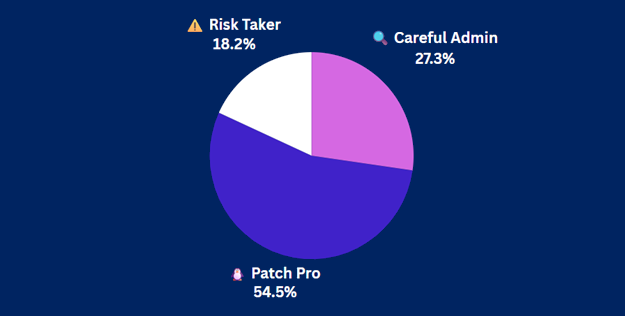
Yesterday's Pulse Check Results |
How do you handle Linux kernel updates? |
|
|
Security Tools You Can Use |
-
Bitdefender: Broad coverage from endpoint to cloud, now 30% off.
- NordLayer: Secure and simplify remote access, now 22% off.
-
Risk Monitoring: Tools to catch vulnerabilities early.
|
|
|
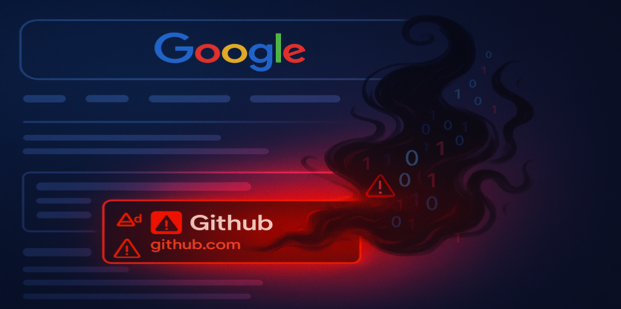
GPUGate Malware Exploits Google Ads and GitHub |
The GPUGate malware campaign exploits Google Ads and GitHub to target Western European IT pros. Arctic Wolf reports that the attackers use fake GitHub ads to trick users into downloading weaponized installers. |
GPUGate uses GPU-gated decryption, activating only on physical GPUs with long device names to evade sandboxes. By hitting developers and IT admins, it enables credential theft and ransomware deployment. Arctic Wolf has stated this is an ongoing campaign. Train staff to check download links and use content filtering to block suspicious ads. |
Apache Jackrabbit Bug Opens Door to RCE |
A critical flaw in Apache Jackrabbit could let attackers execute code on unpatched systems.
CVE-2025-58782 stems from insecure JNDI handling, allowing unauthenticated attackers to use crafted references to trigger the deserialization of untrusted data.
Two decades of versions are exposed to data theft, malware, or system takeover. Apache patched this vulnerability in version 2.22.2 by disabling JNDI lookups by default. Upgrade to 2.22.2, and if JNDI is re-enabled, enforce strict validation and a full security review. |
|
|
Move from reactive to proactive security. This guide to Security Automation Best Practices shows you how to streamline operations, reduce analyst fatigue, and improve your security posture. Learn to automate threat detection, vulnerability management, and more. Get your complimentary ebook and start building a stronger defense. |
|
|
Don’t Let Cloud Failures Disrupt Your Business |
Cloud outages and latency issues are rising from physical damage, failures, or misconfigurations… and even the large players like Azure, AWS, and Google Cloud aren’t immune. Building redundancy and resilience into your strategy ensures mission-critical workloads stay online when the unexpected happens. |
Here’s how to build resilience into your cloud strategy: |
- Deploy workloads across multiple regions to reduce localized outage risk.
- Use load balancing to keep traffic and performance stable under stress.
- Automate failover to reroute traffic instantly during disruptions.
-
Replicate data across regions for faster recovery and no data loss.
- Monitor latency continuously to catch early signs of network issues.
- Test disaster recovery and business continuity plans regularly to ensure smooth failover.
|
Cloud resilience is more than a buzzword. Redundancy strategies minimize disruption and protect critical operations. |
|
|
|
Ken Underhill is an award-winning cybersecurity professional, bestselling author, and seasoned IT professional. He holds a graduate degree in cybersecurity and information assurance from Western Governors University, bringing years of hands-on experience to the field. |
|
|
Cybersecurity Insider is a TechnologyAdvice business |
© 2025 TechnologyAdvice, LLC. All rights reserved. |
TechnologyAdvice, 3343 Perimeter Hill Dr., Suite 215, Nashville, TN 37211, USA. |
|
|
|