Bugs and breaches abound, Digital Defenders. |
So much for a quiet start to the week. Adobe is juggling 60 critical flaws while WordPress sites sit exposed. Meanwhile, the money’s drying up, the malware’s multiplying, and Salesforce is in the headlines for all the wrong reasons. |
|
| Here’s what you need to know: |
|
|
Adobe Patches 60 Flaws...But Risks Remain |
Adobe has issued patches for 60 vulnerabilities across 13 products in one of its largest coordinated security releases to date. Many flaws in Adobe Commerce, Photoshop, and other Creative Suite apps could allow remote code execution or privilege escalation via malicious files that exploit memory and input validation weaknesses.
|
However, unpatched systems—and even newly patched ones using vulnerable plugins or misconfigurations—remain at risk from attackers exploiting lingering gaps. Delayed patching risks full workflow compromise; fixes add boundary checks, stronger memory handling, and runtime protections. Deploy updates immediately on systems handling untrusted files, especially on shared or internet-facing networks, to block high-risk exploits. |
New Report: Cybersecurity Budgets Stall at a Dangerous Pace |
Cybersecurity spending growth in 2025 has slowed to just 4%, marking the weakest increase in five years, according to the 2025 Security Budget Benchmark Report by IANS Research and Artico Search.
Economic pressures are driving cuts to security budgets even as threats grow more sophisticated. For the first time since 2020, security’s share of IT spending has dropped, with staffing at a four-year low. Just 11% of leaders say their security teams are fully staffed. And while AI tools can help, they require careful integration to succeed.
Conduct a targeted risk assessment to prioritize funding toward the most business-critical assets and security functions. |
The WordPress Flaw That Hands Hackers Your Site Keys |
A severe vulnerability in the “Database for Contact Form 7, WPforms, Elementor forms” plugin—affecting over 70,000 WordPress sites—could allow unauthenticated remote code execution.
Tracked as CVE-2025-7384 with a CVSS score of 9.8, the flaw stems from PHP Object Injection in the get_lead_detail function, enabling attackers to execute arbitrary code or delete critical files such as wp-config.php.
The POP chain in Contact Form 7 enables attack escalation without user interaction, making exploitation low-effort but high-impact. Updating to version 1.4.4 fixes the flaw with stronger input validation and sanitization. Update the plugin now, enable a WAF, and audit form-handling plugins for insecure deserialization. |
|
|
What’s your top security priority? |
|
|
Friday's Pulse Check Results |
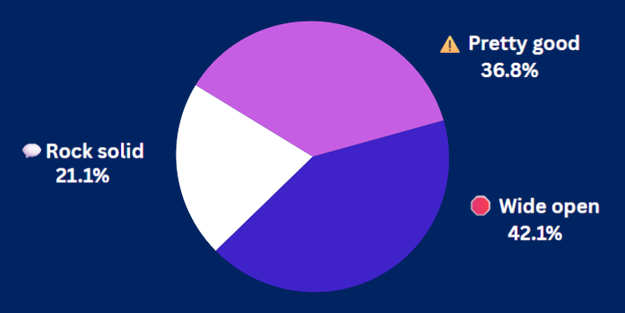
How secure is your vehicle? |
|
|
Security Tools You Can Use |
-
Hackers only need one missed flaw to breach your defenses. See the top 2024 tools that find and fix weaknesses in your network, endpoints, and cloud before they do.
-
One compromised device can open the door to your entire network. Lock down, monitor, and control every mobile endpoint from a single secure dashboard with NinjaOne MDM.
-
Stolen passwords fuel many breaches. Eliminate them with passwordless login, secure account management, and encryption from LogMeOnce that stops hackers cold.
|
|
|
The GitHub Code That Could Wreck Your Computer |
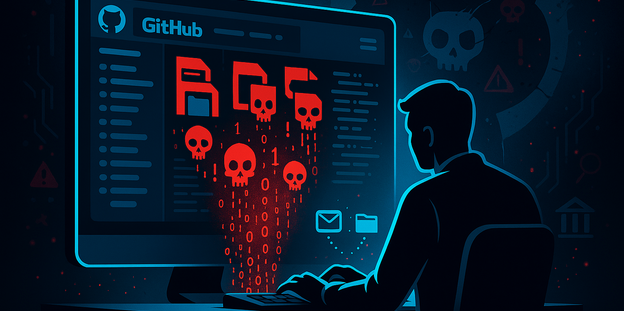
Researchers have uncovered a global malware campaign using fake GitHub repositories to distribute SmartLoader, targeting users seeking game cheats, software cracks, and automation tools.
These malicious projects mimic legitimate repositories with polished documentation and realistic file structures, tricking even experienced users. |
SmartLoader is delivered through malicious GitHub repositories. It uses a batch file to persist on the system, exfiltrate data, and drop payloads like Rhadamanthys. These payloads steal email, FTP, and banking credentials. By exploiting platform trust, the malware infiltrates developer and gaming communities undetected.
Before downloading from GitHub, verify repository authenticity by checking commit history, contributor profiles, and activity—especially for high-risk projects like cracks, cheats, or automation tools. |
Inside the Salesforce Breach That Hit Google, Adidas, and Vuitton |
In one of 2025’s most sophisticated social engineering campaigns, ShinyHunters, likely collaborating with Scattered Spider, breached Salesforce instances at Google, Adidas, Louis Vuitton, and other major brands.
August updates to the situation, as documented by Google, say attackers used voice phishing and malicious OAuth apps to gain persistent API access, exfiltrating customer data across industries.
Blending social engineering, legitimate Salesforce features, and obfuscation, they evaded detection, moved laterally to other cloud platforms, and escalated privileges to access broader datasets. Audit Salesforce apps, limit API permissions, enforce IP allowlisting, and train staff to detect voice phishing before authorizing access. |
|
|
Think Your Cloud Files Are Safe? Think Again |
With more individuals and businesses relying on cloud storage, threat actors are targeting these platforms to steal sensitive files or launch ransomware attacks. |
Misconfigured settings, weak passwords, and unsafe sharing links can turn convenience into risk—making secure cloud storage practices essential right now. |
Here are six ways to lock down your data: |
- Enforce multi-factor authentication (MFA) to strengthen access controls.
- Regularly audit and restrict file-sharing permissions to prevent unauthorized data exposure.
- Implement complex, unique credentials and enforce rotation policies to reduce credential reuse attacks.
-
Encrypt sensitive data at rest and in transit to ensure confidentiality even in the event of a breach.
- Prohibit public link sharing for high-sensitivity data to eliminate uncontrolled access vectors.
-
Continuously monitor access and activity logs to detect and respond to anomalous behavior in real time.
|
|
|
|
Ken Underhill is an award-winning cybersecurity professional, bestselling author, and seasoned IT professional. He holds a graduate degree in cybersecurity and information assurance from Western Governors University, bringing years of hands-on experience to the field. |
|
|
Protect your team with premium policies, guides, and more |
Cybersecurity Insider subscribers can now get 20% off an annual subscription to TechRepublic Premium and unlock unlimited access to hundreds of customizable policy templates, step-by-step checklists, and expert-written guides. Replace days of research and drafting with proven, plug-and-play resources that help your team harden defenses and stay audit-ready — fast. Use the code CSI20 at checkout. |
|
|
Cybersecurity Insider is a TechnologyAdvice business |
© 2025 TechnologyAdvice, LLC. All rights reserved. |
TechnologyAdvice, 3343 Perimeter Hill Dr., Suite 100, Nashville, TN 37211, USA. |
|
|
|