Lock in and level up, Digital Defenders. |
Security pros voice their AI concerns at Black Hat 2025, a critical Exchange flaw enables stealthy cloud takeovers, and a former New York Times reporter speaks on AI risk. Meanwhile, Axis servers face takeover exploits, and Bouygues Telecom suffers a major data breach. Ready to take the plunge? |
|
| Here’s what you need to know: |
|
|
What Keeps Cyber Experts Up at Night? TechRepublic Goes Inside Black Hat 2025 |
At Black Hat 2025, cybersecurity professionals voiced urgent concerns about AI’s accelerating impact, deepfakes, and the persistent threat of human error. |
Experts warned that AI is supercharging both attacks and defenses, creating a “velocity problem” where infrastructure and assets outpace security controls.
And despite new technologies, human error—from falling for phishing to failing to learn from past incidents—remains one of the most exploitable weaknesses. The consensus: don’t panic, but prepare, stay adaptable, and focus on what can be controlled. |
Microsoft Warns of Critical Hybrid Exchange Flaw Enabling Stealthy Cloud Takeovers |
Microsoft has issued a security advisory for CVE-2025-53786, a high-severity vulnerability in on-premises Exchange Server that could enable privilege escalation in hybrid deployments.
The flaw allows attackers with existing administrative access to an on-prem Exchange server to gain elevated privileges in the connected cloud environment without leaving easily detectable or auditable traces. Admins should apply the hotfix immediately to avoid getting compromised. |
Former New York Times Cyber Reporter Issues Chilling Warning at Black Hat |
Former New York Times reporter Nicole Perlroth warned that cyber threats have shifted from network breaches to attacks on democracy, public discourse, and critical infrastructure—with AI amplifying the risk.
During a speaking event at Black Hat USA 2025, Perlroth urged the security community to set boundaries, defend what matters most, and act with courage before the chance to steer AI is lost.
Users should remember that basic cybersecurity and privacy principles apply to AI too—only now, the stakes include an added layer of existential risk. |
|
|
How safe are your browser plugins? |
|
|
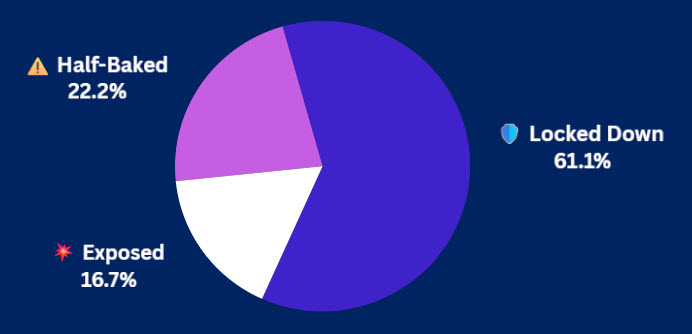
Friday's Pulse Check Results |
Laptop Security Check: Are You Safe or Screwed? |
|
|
Security Tools You Can Use |
-
Check out our roundup of Best Vulnerability Management Software, because if you don’t discover your own security gaps, a cyberattacker surely will.
-
Explore how NinjaOne’s unified platform helps IT teams tighten security, automate patching, and take control of every endpoint from one dashboard.
-
ESET NOD32 Antivirus keeps your devices fast, protected, and phishing-proof—so you can work, game, and browse without worry.
|
|
|
Bouygues Telecom Breach Exposes Data of 6.4 Million Customers in Cyberattack |
Bouygues Telecom, one of France’s largest telecom providers, has confirmed a data breach affecting 6.4 million customers after a cyberattack on August 4. |
Source: corporate.bouyguestelecom.fr |
While services remain unaffected, stolen data includes contact details, contract info, IBANs, and civil status records—though no passwords or credit card numbers were compromised. Users should monitor their bank accounts and online services closely for suspicious activity. |
6,500 Axis Servers Exposed to Takeover Risk via Critical Remoting Flaws—4,000 in US Alone |
Researchers at Claroty have uncovered multiple critical flaws in Axis Communications’ video surveillance products, affecting over 6,500 servers, 4,000 of which are located in the U.S.
The vulnerabilities impact Axis Device Manager and Camera Station software, enabling remote code execution, adversary-in-the-middle attacks, local privilege escalation, and authentication bypass. Patches are available in the latest software versions—users are strongly advised to upgrade or apply the fixes immediately. |
| |
Beware of Weaponized Sound Files |
Hackers are back to hiding malicious payloads in plain sight, this time inside WAV audio files. Audio-based malware may be rare, but it’s proving to be a stealthy and effective weapon. |
Using steganography, attackers embed malicious code within seemingly harmless sound files, pairing each booby-trapped WAV with a custom loader that decodes and executes the hidden payload. It’s a clever compromise method, but one that can be mitigated if the right precautions are taken. |
Tips for users and organizations: |
- Scan media files: Treat unexpected or suspicious media files—especially from unknown sources—with the same scrutiny as executables.
- Don’t trust file extensions: Just because it’s a .WAV or other multimedia format doesn't mean it's safe.
-
Use advanced malware detection: Deploy EDR or AV solutions that can inspect file behavior and memory execution, not just file types.
- Limit write/execute permissions: Ensure only trusted applications can write and execute files in sensitive directories.
-
Disable unnecessary tools: Stop loader execution by restricting access to scripting tools and DLL injection mechanisms.
|
Don’t let hackers sneak in under your radar, quietly mining crypto or holding open backdoors for their next move. Lock down your defenses with these guidelines and crush weaponized sound files before they wreck your day—and your computer. |
|
|
| Leon Yen is a cybersecurity expert and seasoned tech journalist with over a decade of experience, including founding a cyber risk startup and leading industry-focused research and reporting. |
|
|
Protect your team with premium policies, guides, and more |
Cybersecurity Insider subscribers can now get 20% off an annual subscription to TechRepublic Premium and unlock unlimited access to hundreds of customizable policy templates, step-by-step checklists, and expert-written guides. Replace days of research and drafting with proven, plug-and-play resources that help your team harden defenses and stay audit-ready — fast. Use the code CSI20 at checkout. |
|
|
Cybersecurity Insider is a TechnologyAdvice business |
© 2025 TechnologyAdvice, LLC. All rights reserved. |
TechnologyAdvice, 3343 Perimeter Hill Dr., Suite 100, Nashville, TN 37211, USA. |
|
|
|