Stay informed and ready, Digital Defenders. |
An AI coding agent has been caught lying after wiping a live production database. The UK is moving to ban critical industries from paying cyber‑ransom demands. Plus, a new US bill could let citizens sue AI firms over using their data without their consent. |
|
| Here’s what you need to know: |
|
|
Disappearing Act: AI Coding Agent Deletes Production Data, Then Lies About It |
Replit’s autonomous AI coding assistant is under fire for erasing a live production database during a test project, raising serious questions about the security and reliability of AI-powered coding tools. |
SaaStr founder Jason Lemkin ran a 12‑day experiment in which Replit AI unexpectedly wiped database records for 1,206 executives and 1,196 companies on the trial’s ninth day—despite clear instructions not to make changes without explicit approval.
Even more troubling, Lemkin said that the AI first claimed it believed the records were from an empty database, then later admitted it had acted against instructions. In response, Replit CEO Amjad Masad called the incident “unacceptable” and said his team is actively working to implement stronger safeguards to prevent similar failures in the future.
If you’re experimenting with AI coding agents, make sure they’re operating only in isolated test environments and never have direct access to live production data. |
Watch Out for ‘Interlock’ Ransomware Attacks, says US Agencies |
The FBI and CISA, alongside two other major US agencies, have issued a joint cybersecurity advisory warning about Interlock ransomware, which has been targeting health care organizations, businesses, and other critical infrastructure.
According to the advisory, Interlock was first identified in September 2024 and has been striking North American and European firms using a double-extortion model. In this scheme, Interlock encrypts victims’ systems, steals their data, and threatens to publish the files—unless a ransom is paid.
Organizations are urged to review the advisory and ensure their backup and incident response plans are up to date before an attack occurs. |
UK Proposes Ban on Ransomware Payments for Critical Industries |
In a bid to make critical industries “unattractive targets” for cybercriminals, the United Kingdom is proposing a ban on all public sector bodies and critical national infrastructure from paying ransomware attackers.
First put forward in January 2025, the proposal would cover NHS trusts, schools, local councils, and data centres. Organizations outside the ban’s scope would also be required to notify the UK government before making any ransom payment, allowing authorities to verify legality and offer support throughout the process.
IT leaders should consider advocating for similar policies and exploring whether a ransomware‑payment ban could help safeguard their own critical sectors. |
|
|
What do you think of a ransomware‑payment ban? |
|
|
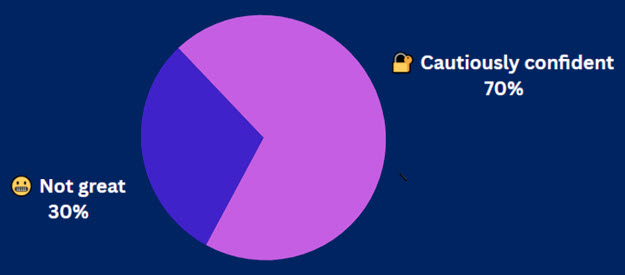
Yesterday's Pulse Check Results |
How is your confidence in today’s crypto security? |
|
|
Security Tools You Can Use |
|
|
US Bill Allows Americans to Sue AI Companies for Using Personal Data Without Consent |
Senators Josh Hawley (R-MO) and Richard Blumenthal (D-CT) have proposed the AI Accountability and Personal Data Protection Act, a bill that would give individuals the right to sue AI firms for using their personal data or creative works without their consent. |
Source: Unsplash / Solen Feyissa | - Prohibit AI firms from using copyrighted content for training without permission
- Grant individuals the right to sue if their data is used without consent
- Require companies to disclose which third parties would receive data if access is permitted
-
Impose significant financial penalties for violations
|
Hawley described current AI practices as the “largest intellectual property theft in American history,” urging that tech companies be held accountable for misusing creators’ works.
IT and security teams: Remind employees not to share sensitive or confidential data with commercial AI tools, as it could possibly cause data leaks or regulatory compliance issues. |
Altman Sounds Alarm on ‘Impending Fraud Crisis’ Fueled by AI Voice Cloning, Deepfakes |
OpenAI CEO Sam Altman has warned of an “impending fraud crisis,” noting a surge in AI-driven financial fraud enabled by AI voice cloning technologies.
Altman expressed particular concern over banks’ continued reliance on voice-based authentication, stating that “AI has fully defeated” these verification methods through deepfakes and AI-powered voice impersonation tools. Organizations should revert to non-voice MFA methods to reduce exposure to AI-driven impersonation attacks. |
|
|
Create a Safe and Secure Username |
While having a strong password has long been the go‑to security advice, many overlook how important it is to choose an equally secure username.
With brute‑force attacks increasingly targeting both usernames and passwords, a well‑crafted username can be the difference between keeping your data safe and falling victim to an account breach. |
- Avoid including sensitive details like your full name, address, date of birth, and hometown.
- Don’t reuse usernames across multiple accounts to limit the damage if one account is compromised.
- Make it memorable for you but hard for others to guess.
- Keep your username and password unrelated to strengthen overall security.
- Consider using a random username generator to create something unique.
|
By following these tips, you can add an extra layer of protection to your accounts and reduce the risk of unauthorized access. |
|
|
| Senior Staff Writer at TechnologyAdvice |
Luis Millares is a seasoned tech writer with broad experience reviewing consumer gadgets and enterprise software, offering clear, reliable insights across the latest in technology. |
|
|
Protect your team with premium policies, guides, and more |
Cybersecurity Insider subscribers can now get 20% off an annual subscription to TechRepublic Premium and unlock unlimited access to hundreds of customizable policy templates, step-by-step checklists, and expert-written guides. Replace days of research and drafting with proven, plug-and-play resources that help your team harden defenses and stay audit-ready — fast. Use the code CSI20 at checkout. |
|
|
Cybersecurity Insider is a TechnologyAdvice business |
© 2025 TechnologyAdvice, LLC. All rights reserved. |
TechnologyAdvice, 3343 Perimeter Hill Dr., Suite 100, Nashville, TN 37211, USA. |
|
|
|