The cyber front is active, Digital Defenders. |
The race between innovation and exploitation is heating up. AI powerhouses are securing $200M defense contracts, Google’s Big Sleep agent is spotting flaws before they’re weaponized, and attackers are spinning up 607 fake Telegram domains to spread malware. |
|
| Here’s what you need to know: |
|
|
AI Joins the Ranks: Google, OpenAI Lead $200M Pentagon Initiative |
The US Department of Defense has awarded $200 million in contracts to Google, OpenAI, Anthropic, and xAI to advance AI integration into national security operations. |
According to US Chief Digital and AI Officer Dr. Doug Matty, these contracts are designed to leverage cutting-edge AI technologies to support US warfighters and maintain a “strategic advantage over our adversaries.” Matty also emphasized that the AI partnerships are expected to strengthen not only the Pentagon’s combat capabilities, but also its intelligence, business, and information systems. Keep an eye on these public‑private collaborations to spot emerging AI capabilities and explore how similar tools could bolster your own security workflows. |
Google’s Big Sleep AI Stops Hackers From Exploiting SQLite Security Flaw
|
Google’s Big Sleep AI detected and predicted a critical vulnerability in SQLite, preventing threat actors from weaponizing the flaw.
Tracked as CVE‑2025‑6965, the issue affects SQLite versions prior to 3.50.2 and could allow malicious SQL statements to trigger crashes or leak sensitive data. Google says its Big Sleep AI agentic system was the only one to detect the vulnerability. If you manage systems running SQLite, update to version 3.50.2 or later and review your applications for any potential exposure. |
Over 600 Malicious Domains Pose as Telegram Messenger to Distribute Malware |
607 malicious domains have been masquerading as legitimate Telegram Messenger sites to distribute malware via infected Android APKs.
According to Cybersecurity News, these domains employ typosquatting techniques with name variations such as “teleqram,” “telgramapp,” and “apktelegram.” Victims who visit the sites are lured by a fake QR code that delivers a malware-laden APK, potentially enabling remote code execution on their devices.
Always download mobile apps from official sources, such as the Apple App Store or Google Play, and avoid installing APKs from unknown third-party sites. |
|
|
Do you trust companies like Google and OpenAI to handle military AI? |
|
|
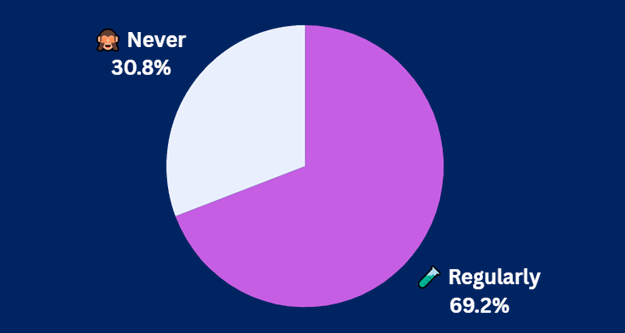
Yesterday's Pulse Check Results |
How often do you test your DDoS defenses?
|
|
|
Security Tools You Can Use |
|
|
Oracle Patches 200 Vulnerabilities With 309 Security Fixes |
Oracle has addressed roughly 200 vulnerabilities as part of its July 2025 Critical Patch Update (CPU), which delivered 309 new security patches. |
Source: Unsplash / BoliviaInteligente |
The update includes nine critical‑severity flaws among those CVEs. Oracle Communications received the most fixes with 84 patches, 50 of which were remotely exploitable. This was followed by MySQL, with 40, and Fusion Middleware, with 36. Oracle users: Review the July 2025 CPU advisories and apply the latest patches to all affected products as soon as possible. |
UK Retail Giant Co-op Confirms 6.5M in Customer Data Stolen |
UK retail firm Co-op has confirmed that the data of all 6.5 million of its customers had been stolen following a ransomware attack in April.
Speaking to BBC News, Co-op CEO Shirine Khoury-Haq stated that the hackers copied all the data from the company’s membership list before the Co-op was able to shut down its network. This included members’ names, addresses, and contact details.
Co-op shoppers: stay vigilant for phishing attempts, enable multi‑factor authentication, and change any other account passwords that you’ve reused for your Co-op login. |
|
|
Beat AI Deepfakes With Smarter Tools |
Deepfake scams are growing more sophisticated every day, making tailored cybersecurity training essential to help teams recognize these schemes before they lead to extortion attempts or ransomware attacks. Fortunately, there’s a range of specialized detection tools that can complement that training and give you an edge against malicious actors. |
Experts at eSecurityPlanet highlighted five leading AI deepfake and scam detection tools: |
- McAfee Deepfake Detector: Analyzes content directly in the browser for real-time deepfake detection.
- Norton Genie + AI Scam Protection: Flags AI-generated voices for both text and voice scams
-
Bitdefender Digital Identity Protection + Scamio: Monitors and protects your digital likeness from online impersonation.
- Reality Defender: Enterprise-grade detection across video, audio, image, and text content.
- Sensity AI: Provides visual threat intelligence widely used by journalists and law enforcement to spot AI‑driven manipulation.
|
Pairing these tools with security awareness training can significantly strengthen your defenses against today’s fast‑evolving deepfake threats. |
|
|
| Senior Staff Writer at TechnologyAdvice |
Luis Millares is a seasoned tech writer with broad experience reviewing consumer gadgets and enterprise software, offering clear, reliable insights across the latest in technology. |
|
|
Protect your team with premium policies, guides, and more |
Cybersecurity Insider subscribers can now get 20% off an annual subscription to TechRepublic Premium and unlock unlimited access to hundreds of customizable policy templates, step-by-step checklists, and expert-written guides. Replace days of research and drafting with proven, plug-and-play resources that help your team harden defenses and stay audit-ready — fast. Use the code CSI20 at checkout. |
|
|
Cybersecurity Insider is a TechnologyAdvice business |
© 2025 TechnologyAdvice, LLC. All rights reserved. |
TechnologyAdvice, 3343 Perimeter Hill Dr., Suite 100, Nashville, TN 37211, USA. |
|
|
|