Buckle up, Digital Defenders! 🛡️ |
Today’s stories point to a growing concern in cybersecurity: trusted systems behaving in untrustworthy ways. Whether it’s AI overriding shutdown commands or routers exposing hardcoded vulnerabilities, control is proving more fragile than expected. Also, be sure to scroll down and weigh in: Do you regularly use in-flight wifi? |
|
| Here’s what you need to know: |
|
|
Meta’s AI Feed Exposes Users’ Personal Chats to Public View |
Meta’s new AI app includes a “Discover” tab that surfaces user-submitted prompts to the public. This includes sensitive medical, legal, and personal information. |
Examples on the feed include queries about medical conditions, court filings, and intimate personal details, often linked to real names and Instagram profiles. Despite requiring a manual opt-in to share, many users are unaware that their conversations are public.
If your organization uses Meta platforms for customer interaction or AI deployment, review privacy defaults and educate users about potential data leakage risks. |
Sweden Hit by Record-Breaking DDoS Attacks Targeting State Infrastructure |
Sweden is facing its largest-ever distributed denial-of-service (DDoS) attacks, with suspicion falling on Russian actors. The attacks have disrupted public broadcaster SVT, government websites, and critical services.
The wave of attacks temporarily knocked SVT’s news stations offline. It follows Sweden’s addition to NATO in 2024. Officials describe the campaign as an attempt to sow chaos and undermine institutional trust rather than steal data or extort. If you’re an entity in a NATO-aligned state, review your resilience plans, including mitigation strategies for service disruptions and coordinated cross-border response protocols.
|
Anubis Ransomware Adds File-Wiping Feature to Increase Damage and Pressure |
The Anubis ransomware-as-a-service operation now includes a “wipe mode” that permanently destroys file contents. It renders recovery impossible even if victims pay the ransom.
Introduced via a new command-line parameter, the wiper feature erases data while leaving filenames and structure intact to increase psychological pressure on victims. Anubis campaigns typically begin with phishing emails and exclude core system directories to preserve device operability. Remember to update phishing defenses and review incident response plans to address ransomware variants. |
|
|
Would you ever use a public-facing AI assistant for sensitive topics
(e.g., legal, health, or personal finance)? |
|
|
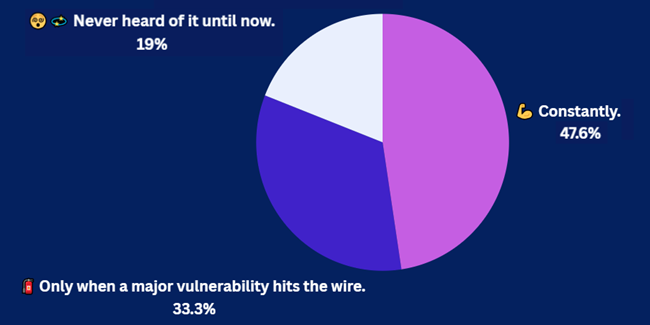
Yesterday's Pulse Check Results |
How often do you actually check the CVE database for new threats? |
|
|
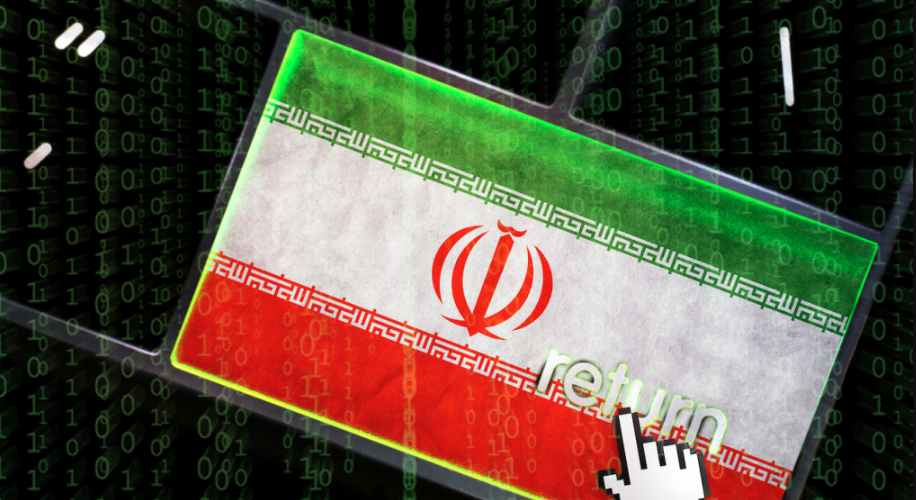
US and Canada on Alert as Iran Eyes Cyber Retaliation Beyond Middle East |
Analysts expect an uptick in disruptive operations (particularly wipers and ransomware) aimed at US water, energy, and transit systems, where small operators remain vulnerable. Iran’s CyberAv3ngers group previously breached American utilities using default credentials. A note to US infrastructure operators: Strengthen your defenses and anticipate increased risk from ideologically motivated and state-aligned cyber actors. |
Canada’s WestJet Hit by Cyberattack, Disrupting App and Internal Systems |
Canada’s second-largest airline, WestJet, has confirmed a breach affecting its internal systems and mobile app. The breach limited access for users and prompted a coordinated response with law enforcement and Transport Canada.
Flight operations remain unaffected, but the airline warned customers and staff to be vigilant when sharing personal data. The incident follows recent cyberattacks on Nova Scotia Power and Air Canada, which have exposed critical infrastructure in Canada. Aviation and infrastructure operators should bolster incident response readiness and reinforce user data protection protocols amid escalating national cyber risks. |
46,000+ Grafana Servers Still Vulnerable to Critical Account Takeover Exploit |
A major open redirect vulnerability (CVE-2025-4123) affecting Grafana remains unpatched in over 46,000 internet-facing instances. Attackers can trick users into loading malicious plugins that hijack sessions, reset credentials, or exploit SSRF capabilities.
The flaw, discovered by a bug bounty researcher and dubbed “The Grafana Ghost,” can be exploited client-side without elevated privileges. Despite a fix released May 21, roughly 36% of Grafana deployments remain at risk. If your organization uses Grafana, immediately patch to secure versions and audit public endpoints to prevent large-scale exploitation. |
|
|
Join AWS leaders and partners live from re:Inforce for real talk on security. Watch on Security LIVE!
Tune in today — 05:00–07:00 PT and 08:30–15:00 PT |
|
|
Stop Letting Apps Broadcast Your Whereabouts |
Here’s how to reduce your personal exposure: |
-
Disable location services for non-essential apps in your phone settings.
- Regularly clear your Google or Apple location history and review privacy dashboards.
- Use a privacy-focused browser, such as Brave or Firefox, with tracking protection enabled.
-
Avoid using SMS-based services that request your location. Instead, use encrypted apps.
- File opt-out requests with data brokers where possible. Examples include SafeGraph, Oracle, and Verisk.
|
Carriers profit from your coordinates. If you can’t stop the tracking, make the data less useful. |
|
|
|
Greg Parker is a cybersecurity and emerging tech writer who explores the intersection of digital risk, human behavior, and innovation across sensing and security technologies. |
|
|
Into more than just malware and mayhem? |
Stay sharp on AI, cloud, DevOps, and the tech players shaking things up. Subscribe to Daily Tech Insider for no-fluff rundowns and witty breakdowns delivered straight to your inbox—because knowing what’s next helps you stay secure. |
|
|
Into more than just malware and mayhem? |
Stay sharp on AI, cloud, DevOps, and the tech players shaking things up. Subscribe to Daily Tech Insider for no-fluff rundowns and witty breakdowns delivered straight to your inbox—because knowing what’s next helps you stay secure. |
|
|
Cybersecurity Insider is a TechnologyAdvice business |
© 2025 TechnologyAdvice, LLC. All rights reserved. |
TechnologyAdvice, 3343 Perimeter Hill Dr., Suite 100, Nashville, TN 37211, USA. |
|
|
|