Welcome back, Digital Defenders! 🛡️ |
AI scams, insider breaches, and zero-days are flooding the threat landscape. From Meta’s data grab to Coinbase’s $20M standoff, we’ve got the intel you need to stay ahead of the game.
Also, don’t miss our showdown at the bottom: Cast your vote in the great Mac vs. Windows security debate. |
|
|
Here’s what you need to know: |
-
Meta slammed for AI training with Facebook, Instagram data
- Major systems hacked on first day of Pwn2Own Berlin
- FBI flags AI deepfake calls impersonating U.S. officials
- Coinbase hit by insider data breach, refuses $20M ransom
- Critical plugin flaws found in popular CI/CD platform Jenkins
|
|
|
Meta Faces Legal Action in EU Over AI Training, User Privacy Violations |
EU privacy group noyb has issued a cease-and-desist to Meta, warning the tech giant of a potential class action lawsuit if it proceeds with plans to train its AI models with users’ public Facebook and Instagram data. |
Image Source: informationweek.com. |
The group claims Meta’s opt-out model violates the GDPR by restricting users’ rights to decline participation before training begins.
Social users should be cautious of platforms that use personal data without explicit, opt-in consent, especially in today’s AI-driven world. |
Windows, Red Hat, Oracle, and Docker Hacked at Pwn2Own Berlin 2025 |
Pwn2Own Berlin 2025 kicked off with a high-impact first day, as security researchers discovered zero-day vulnerabilities impacting Microsoft Windows 11, Red Hat, Oracle VirtualBox, and Docker Desktop.
Be sure to stay alert for patches addressing these newly discovered vulnerabilities. |
FBI Warns of AI Voice Deepfake Attacks Against US Officials in Ongoing Vishing Campaign |
The FBI has issued a public warning about a surge in voice phishing (vishing) attacks using AI-generated audio deepfakes to impersonate senior U.S. officials. Cybercriminals use voice clones and smishing tactics to trick victims into handing over sensitive information or account access.
The FBI advises the public not to assume messages from government officials are authentic without verification. |
|
|
🛡️ This section contains sponsored cybersecurity insights. |
|
|
Coinbase Confirms Data Breach Backed by Insider Help, Rejects $20M Ransom Demand |
Coinbase has disclosed a serious data breach involving cybercriminals partnering with insiders to access internal systems and steal sensitive data from approximately 1 million users. Personal data was exposed. However, no passwords, private keys, or wallets were accessed. |
Image Source: independent.ie. |
The attackers demanded a $20 million ransom to stop the data release. However, Coinbase refused and instead offered a $20 million reward for information leading to the criminals’ capture. In light of this situation, always use two-factor authentication and strong passwords. Stay alert for phishing attempts to keep your crypto assets safe. |
Google Patches Actively Exploited Chrome Zero-Day as CISA Issues Urgent Warning |
Google has released a security advisory addressing a critical Chrome zero-day vulnerability. The actively exploited flaw could allow attackers to bypass security mechanisms, execute unauthorized code, or escape the browser sandbox.
Chrome users are highly advised to patch their browsers immediately to avoid being compromised. |
Jenkins Issues Critical Security Alert for Vulnerabilities in Popular Plugins |
Jenkins, the most widely used CI/CD platform in the world, has released a critical security advisory highlighting serious vulnerabilities in widely used plugins that enable attackers to bypass authentication, execute arbitrary code, or access sensitive systems without authorization.
Jenkins admins are strongly urged to update or disable the flawed plugins to protect their CI/CD environments from being hacked. |
|
|
Read this ebook to learn why native tools fall short when protecting your SaaS application data and what a resilient SaaS data protection strategy looks like |
|
|
Think Your Mac or PC Is Safe? Think Again |
Image Source: plainenglish.io. |
Macs used to fly under the radar thanks to a smaller user base, but that’s changing fast. As more people use macOS, attackers are taking notice. Meanwhile, Windows faces more frequent threats but also pushes patches faster. Each has strengths, but neither is bulletproof. The bottom line: both platforms offer solid defenses, but they can't save you from poor digital hygiene.
Here's how to stay one step ahead, no matter which you use: |
-
Stay alert: Macs face fewer threats, but growing attacks mean safe habits still matter.
- Update regularly: macOS updates can lag, so check for patches often.
- Use built-in tools: Mac’s simplicity makes security easier, so take advantage of it.
|
- Stay updated: Regular OS and software updates help reduce vulnerabilities.
- Use third-party tools: Layer built-in protections with trusted antivirus/anti-malware.
- Use a third-party browser: Edge collects data; Firefox or Brave offer more privacy.
-
Stay vigilant: More attacks mean being extra cautious with downloads, emails, and links.
|
Remember: No operating system is immune to cyber threats. The biggest risk isn’t the system—it’s the user behind the keyboard. |
|
|
Security Question of the Day |
Which operating system do you view as more secure? |
|
|
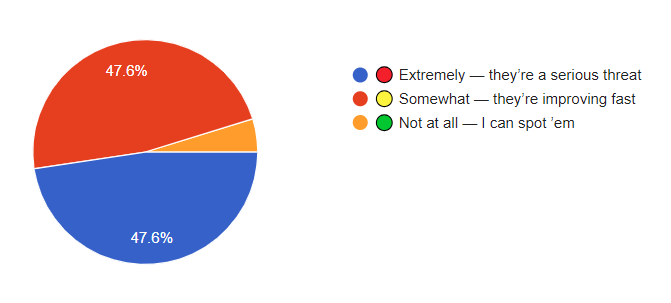
Security Question of the Day 5-15-25: Results |
How worried are you about AI deepfakes? |
|
|
| Leon Yen is a cybersecurity expert and seasoned tech journalist with over a decade of experience, including founding a cyber risk startup and leading industry-focused research and reporting. |
|
|
|
Liz Ticong is a tech writer specializing in AI and software tools, known for turning complex topics into clear, actionable insights through hands-on testing and analysis. |
|
|
Cybersecurity Insider is a TechnologyAdvice business |
© 2025 TechnologyAdvice, LLC. All rights reserved. |
TechnologyAdvice, 3343 Perimeter Hill Dr., Suite 100, Nashville, TN 37211, USA. |
|
|
|