Greetings, Digital Defenders! 🛡️ |
Buckle up. This week brings a flurry of critical patches, new attack tactics, and global tension driving cyber threats sky-high. Google’s rolling out elite protections, Microsoft’s plugging dangerous flaws, and scammers are getting bolder. Let’s break it all down. |
|
|
Here’s what you need to know: |
- Google launches new Android security suite
- Microsoft patches five zero-days affecting core Windows components
- Marks & Spencer confirms customer data stolen in recent cyberattack
- Hackers hijack government email platform to send fake toll alerts
|
|
|
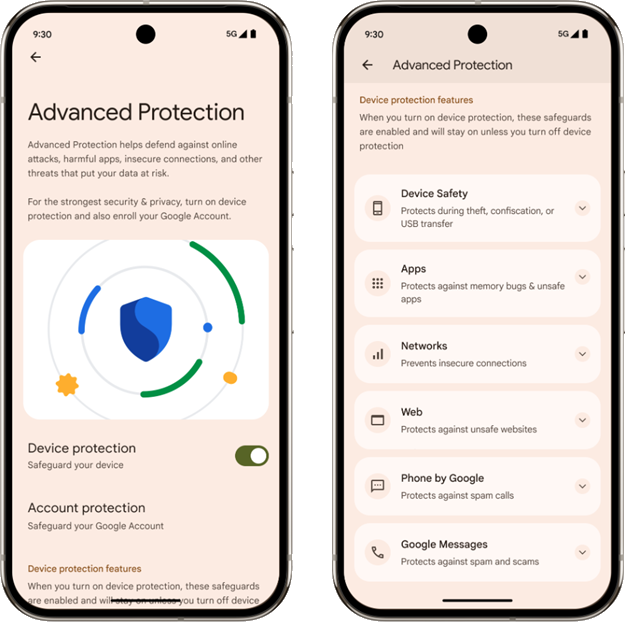
Google’s Advanced Protection Marks a Turning Point in Mobile Security |
Google is bringing its highest level of security, Advanced Protection, to Android 16.
Designed for those most at risk of targeted attacks, like journalists, political figures, and human rights workers, the update locks down app installs, boosts real-time threat scanning, and adds tamper-resistant logging for Android devices. |
Source: Google Security Blog |
If you handle sensitive info, this upgrade could be your best line of defense |
Generative AI, Global Tensions Drive 72% Spike in Cyber Risk |
The World Economic Forum’s 2025 report shows 72% of organizations are seeing more cyber risk, with nearly 60% changing their strategies due to rising geopolitical tensions. Nearly half of respondents flagged the malicious use of generative AI as a growing threat.
The report also unveils a rising gap between decision-makers and security leaders, especially in smaller organizations, which hinders fast, effective responses to emerging threats. If your defenses aren’t evolving, you’re already behind. Now’s the time to reassess your risk posture, close leadership gaps, and implement AI-aware security protocols. |
Patch Tuesday: Microsoft Fixes Five Zero-Days |
Microsoft’s May Patch Tuesday addresses five zero-day vulnerabilities across key Windows components.
One (CVE-2025-30397) allows remote code execution via a type confusion flaw in the Microsoft Scripting Engine. Others (including CVE-2025-30400 and CVE-2025-32701) are elevation of privilege bugs affecting the DWM Core Library, CLFS Driver, and WinSock. Admins should apply these patches immediately to prevent exploitation. |
|
|
M&S Confirms Hackers Stole Customer Contact Info in Easter Cyberattack |
Weeks after online disruptions, Marks & Spencer has confirmed that hackers made off with customer names, phone numbers, addresses, and order histories. Payment info and passwords weren’t taken, but the stolen data is enough to fuel phishing attacks. |
If you’ve shopped with M&S, watch for suspicious emails posing as order updates. |
Scammers Exploit GovDelivery to Send Fake Government Emailsd |
Hackers accessed a contractor’s GovDelivery account to send scam emails from an official Indiana government address. The messages linked to fake toll payment sites designed to steal personal and financial info. Officials say current systems weren’t breached, but an earlier compromise isn’t ruled out.
Even legit-looking emails can be fake, so don’t click payment links unless you’re sure they’re real. |
Fortinet Fixes Zero-Day Exploited in FortiVoice Systems |
Fortinet has addressed a critical vulnerability (CVE-2025-32756) affecting its FortiVoice enterprise phone systems. The flaw, a stack-based overflow, allows unauthenticated attackers to execute remote code via specially crafted HTTP requests. Exploitation has included credential logging and malware deployment.
Fortinet advises users to update affected systems and disable HTTP/HTTPS administrative interfaces if immediate patching isn't possible. |
|
|
-
Vulnerabilities can quietly wreck your system. Our roundup of the Best Vulnerability Management Software shows which tools can help you find and fix the cracks before attackers do.
-
Want to keep your online activity private for good? A lifetime subscription to OysterVPN might be worth considering: there are no renewals, and you'll have solid protection when needed.
|
🛡️ This section contains sponsored cybersecurity insights. |
|
|
Don’t Trust That ‘Official’ Government Email |
Just because an email looks like it’s from a .gov address doesn’t mean it’s safe. In some cases, attackers can gain access to trusted accounts, like a government contractor’s, and use legitimate systems to send emails that appear official to launch phishing attacks. |
Source: Australian Government eSafety Commissioner |
Here’s how to protect your organization: | -
Verify the context, not just the address: Real domains can still be abused if the account behind them is compromised.
- Avoid clicking links in unexpected messages: If it urges immediate action, visit the official site directly.
- Watch for urgency and payment language: Phrases like “toll overdue” or “pay now” are common phishing tactics.
-
Use threat detection that flags unusual behavior: Account compromise can bypass simple domain checks, and behavioral analysis adds another layer.
|
Even trusted sources can be used against you, so always verify before you act. |
|
|
| Leon Yen is a cybersecurity expert and seasoned tech journalist with over a decade of experience, including founding a cyber risk startup and leading industry-focused research and reporting. |
|
|
|
Liz Ticong is a tech writer specializing in AI and software tools, known for turning complex topics into clear, actionable insights through hands-on testing and analysis. |
|
|
Cybersecurity Insider is a TechnologyAdvice business |
© 2025 TechnologyAdvice, LLC. All rights reserved. |
TechnologyAdvice, 3343 Perimeter Hill Dr., Suite 100, Nashville, TN 37211, USA. |
|
|
|