Happy Friday, Digital Defenders! 🛡️ |
This week’s warnings hit close to home—from threats to our energy grid to vulnerabilities in everyday apps. Throw in shifting tech priorities, a record spyware fine, and stealthy malware aimed at developers, and the message is clear: the pressure is on.
|
|
|
Here’s what you need to know: |
-
AI overtakes cybersecurity in 2025 IT spending priorities
- CISA issues urgent alert as hackers target SCADA systems
- Pegasus spyware case ends with $168 million on the line
- Smishing scam targets Google, Apple wallet users
|
|
|
AI Budgets Eclipse Cybersecurity in 2025, AWS Study Finds |
According to a new global study by Amazon Web Services (AWS), 45% of IT leaders have prioritized generative AI as their top budget focus for 2025, surpassing cybersecurity at 30%. The survey, encompassing 3,739 senior IT decision-makers across nine countries, indicates a significant shift in corporate technology strategies. |
Source: MarketsandMarkets |
Notably, 90% of organizations already leverage generative AI tools, with 44% moving beyond pilot phases into real-world deployment. Despite this surge in AI adoption, security remains a critical consideration, especially in regulated industries where advanced capabilities and robust privacy features are paramount. As AI takes center stage in IT budgets, upgrade security measures to safeguard these advanced systems. |
CISA Issues Urgent Warning: Oil & Gas SCADA Systems at Risk |
CISA has issued a critical alert warning that Industrial Control Systems (ICS) and SCADA platforms in the oil and gas sector are being actively targeted by state-backed and criminal hackers.
Exploiting outdated software, weak authentication, and exposed interfaces, attackers could gain access to and manipulate physical infrastructure—such as valves, pressure systems, and flow controls—turning cyber risks into real-world safety threats. This alert underscores a critical truth: cybersecurity now safeguards both data and physical safety. |
NSO Group Fined $168M for WhatsApp Hack |
NSO Group, infamous for its Pegasus spyware, has been fined nearly $168 million for targeting 1,400 WhatsApp users, including journalists, activists, and diplomats. A court found the Israeli firm to be in violation of multiple privacy laws, confirming that Pegasus was covertly installed through missed WhatsApp calls to extract chats, location data, and more.
Spyware may be stealthy, but this ruling proves it’s not above the law. Stay alert—sometimes a missed call is more than just a missed call. |
|
|
Smishing Kit ‘Panda Shop’ Targets Google, Apple Wallets |
A new Chinese smishing kit, dubbed “Panda Shop,” is making waves by stealing Google and Apple Pay credentials. This kit tricks users into entering payment details on fake mobile-friendly sites, then converts that data into digital card images. These images are used to enroll stolen cards into mobile wallets, enabling fraudsters to make unauthorized purchases.
|
If you receive a text prompting you to verify payment info, pause and check its authenticity. Your digital wallet could be at risk. |
Fake Python Package Targeting Discord Devs Downloaded 11,500 Times |
A malicious Python package named “pycord-self” has been discovered on PyPI, targeting Discord developers. Masquerading as the legitimate “discord.py-self” library, it steals authentication tokens and installs a backdoor for remote system access. This package has been downloaded over 11,500 times, highlighting the risks of typosquatting in software repositories.
Developers: Always double-check package names and sources before installation—typos can lead to significant security breaches. |
SysAid ITSM Vulnerability Exploited for Remote Code Execution |
Threat actors have exploited a critical vulnerability (CVE-2023-47246) in SysAid's on-premise ITSM software. The flaw allows unauthenticated attackers to execute remote code, potentially compromising systems. SysAid has released a patch (version 23.3.36) to address this issue.
If your organization uses SysAid on-premise, update those systems immediately to prevent potential breaches. |
|
|
-
Hunt down vulnerabilities before they’re exploited. Our roundup of the Best Vulnerability Management Tools helps IT teams spot weak points early and stay one step ahead of attackers.
-
Ready to pivot into cybersecurity? This career guide from TechRepublic lays out the certifications, skills, and starter steps to help you break into one of tech’s most in-demand fields.
|
🛡️ This section contains sponsored cybersecurity insights. |
|
|
Don’t Let a Typo Install Malware |
That fake Python package making headlines this week? It’s a textbook case of typosquatting—when attackers sneak malicious code into lookalike packages, hoping developers miss a letter and install the wrong one. |
Some are cheap replicas that’ll crash on you faster than a bad first date, while others are packing malicious software or hardware designed to hack your life into oblivion. What’s a Black Friday bargain hunter to do? |
Here’s how to stay a step ahead: |
- Check names carefully: Even one off-letter in a package name can open the door to a backdoor. marketplaces.
- Use tools like Socket or Phylum: They scan for risky dependencies before you add them to your project.
-
Stick to trusted sources: Always install from official repositories, not random links.
- Test in a sandbox first: Isolating new installs helps limit fallout if something goes wrong.
|
Typos are easy to make, but catching them early can prevent malware. |
|
|
| Secure Links: The Must-Reads |
|
|
| Secure Links: The Must-Reads |
|
|
US Sanctions Myanmar Militia Over Cyber Scam Operations |
The U.S. Treasury Department has imposed sanctions on Myanmar's Karen National Army (KNA), its leader Col. Saw Chit Thu, and his two sons for allegedly facilitating cyber scams, human trafficking, and cross-border smuggling.
These groups allegedly operate scam centers across Southeast Asia, using forced labor to target victims worldwide through phishing texts, fake job ads, and romance scams. |
Col. Saw Chit Thu, commander of Myanmar’s Karen National Army. Source: Frontier Myanmar |
Those shady texts and DMs? They could be coming from operations just like this. Think twice before clicking, and don’t share personal info with unknown senders. |
Masimo Confirms Cyberattack, Slows Medical Device Production |
Medical technology firm Masimo has confirmed a recent cyberattack that impacted its production systems, causing significant delays in manufacturing and order processing. Several facilities are running below capacity as the company works to restore operations and assess the damage.
Device shipments may be delayed. If you depend on Masimo products, check with providers about availability. | |
|
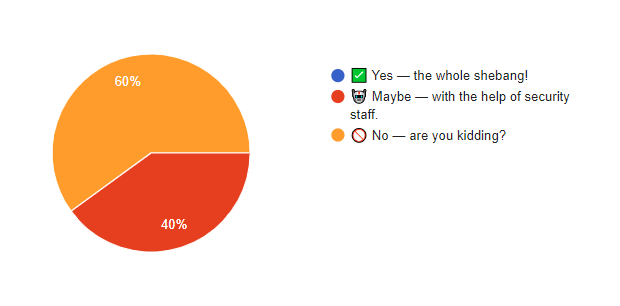
Security Question of the Week: Results |
Would you trust AI to write your company's security policies? |
Share your thoughts in our weekly poll—new every Monday! |
|
|
| Leon Yen is a cybersecurity expert and seasoned tech journalist with over a decade of experience, including founding a cyber risk startup and leading industry-focused research and reporting. |
|
|
|
Liz Ticong is a tech writer specializing in AI and software tools, known for turning complex topics into clear, actionable insights through hands-on testing and analysis. |
|
|
We're looking for talented writers to help shape Cybersecurity Insider. If you're passionate about cyber security, apply to join our team! |
|
|
Cybersecurity Insider is a TechnologyAdvice business |
© 2025 TechnologyAdvice, LLC. All rights reserved. |
TechnologyAdvice, 3343 Perimeter Hill Dr., Suite 100, Nashville, TN 37211, USA. |
|
|
|